Have you ever wondered why some people’s Quran recitation sounds so beautiful and clear while others struggle to get it right? The secret often comes down to two simple concepts: Takhfeem and Tarqeeq. These might sound like complicated Arabic terms, but they’re actually pretty straightforward once you understand them.
Think of it like this: when you’re speaking English, some sounds are naturally heavier (like the “R” in “raw”) and others are lighter (like the “L” in “light”). Arabic has the same thing, but it’s even more important to get right because Tajweed rules help preserve the exact way the Quran was revealed.
If you’ve been learning Quran recitation and feel like something’s missing, mastering Takhfeem and Tarqeeq might be exactly what you need. These rules don’t just make your reading sound better; they actually protect the meaning of the words and help you connect more deeply with the Quran.
Let’s break down why these rules matter so much and how you can start applying them in your own recitation.
What Are Takhfeem and Tarqeeq?
Before we talk about why they’re important, let’s understand what these terms actually mean.
Understanding Takhfeem (Heavy Letters)
Takhfeem literally means “to make thick or heavy.” When you apply Takhfeem in Tajweed, you’re pronouncing certain Arabic letters with a full, deep sound that fills your mouth. Your tongue rises toward the roof of your mouth, creating that rich, heavy quality.
Think of it like adding weight to your voice. The sound becomes fuller, deeper, and more resonant. In English, the closest comparison might be the heavy “R” sound in words like “raw” or “room.”
Letters that always require Takhfeem are called heavy letters or Isti’laa letters. There are seven of them, and scholars created a helpful phrase to remember them: “خُصَّ ضَغْطٍ قِظْ” (Khuss Daght Qith).
These letters are:
- خ (Kha)
- ص (Saad)
- ض (Daad)
- غ (Ghain)
- ط (Taa)
- ق (Qaaf)
- ظ (Dhaa)
Whenever you see these letters, you pronounce them with heaviness no matter what. There’s no exception.
Understanding Tarqeeq (Light Letters)
Tarqeeq means the opposite, “to make thin or light.” When you apply Tarqeeq, you’re pronouncing letters with a soft, delicate sound. Your tongue stays relaxed and flat, and the sound comes out light and clear.
It’s like a gentle breeze compared to the strong wind of Takhfeem. The sound feels softer, more delicate, and less pronounced.
Most Arabic letters are naturally pronounced with Tarqeeq. Only the seven heavy letters listed above are always heavy. Everything else defaults to being light letters unless specific conditions change that.
Why Takhfeem and Tarqeeq Matter So Much

You might be thinking, “Okay, I get it, some letters are heavy, some are light. But why is this such a big deal?”
Great question. The importance of Takhfeem and Tarqeeq in Tajweed goes way beyond just sounding nice.
Protecting the Meaning of the Quran
This is the biggest reason. Getting heavy and light letters wrong can actually change the meaning of words. And when we’re talking about the word of Allah, that’s pretty serious.
Here’s a real example: The word “قَلْب” (qalb) means “heart” when pronounced correctly with heavy Qaaf. But if you mistakenly pronounce it lightly, it could sound like “كَلْب” (kalb), which means “dog.”
Imagine confusing those two meanings in Quranic recitation! This is why proper Tajweed pronunciation isn’t optional; it’s essential for preserving the exact message that was revealed.
Making Your Recitation Beautiful
Let’s be honest, we all want our Quran recitation to sound beautiful. When you master Takhfeem and Tarqeeq, your recitation naturally becomes more melodious and pleasant to listen to.
Professional Qaris (Quran reciters) sound amazing, not just because they have nice voices, but because they apply these rules precisely. The contrast between heavy and light sounds creates a natural rhythm and flow that makes the recitation captivating.
Following the Way of the Prophet (PBUH)
The Prophet Muhammad (peace be upon him) received the Quran and recited it in a specific way. The rules of Tajweed, including Takhfeem and Tarqeeq, help us preserve that exact pronunciation through the generations.
When you learn these rules correctly, you’re connecting with a tradition that goes back 1400 years. You’re reciting the way the Companions recited, the way the Prophet recited.
The Special Case of Letter Raa (ر)
Most Arabic letters are straightforward; they’re either always heavy or always light. But three letters are special: Alif (ا), Laam (ل), and Raa (ر). These can be heavy or light depending on the situation.
The letter Raa is probably the most important one to master because it appears so frequently in the Quran.
When Raa Becomes Heavy
Raa is pronounced with Takhfeem (heaviness) in these cases:
- When Raa has Fatha (َ) on it. Example: رَسُولُ (Rasool) – The Raa is heavy here.
- When Raa has Dammah (ُ) on it. Example: رُكُوعُ (Rukoo’) – Heavy Raa again.
- When Raa is silent and follows a letter with Fatha, Example: قَرْنَاً (Qarnaa) – The silent Raa is heavy because of the Fatha before it.
- When Raa is silent and follows a letter with Dammah. Example: القُرْآنِ (Al-Qur’an) – Heavy Raa following the Dammah.
When Raa Becomes Light
Raa is pronounced with Tarqeeq (lightness) in these situations:
- When Raa has Kasrah (ِ) on it, Example: رِيحٌ (Reeh) – The Raa is light here.
- When Raa is silent and follows a letter with Kasrah. Example: فِرْعَوْنُ (Fir’awn) – Light Raa because of the Kasrah before it.
- When Raa is silent and follows a silent Yaa. Example: قَدِيرٌ (Qadeer) – The Raa is light regardless of what comes before the Yaa.
Learning these Raa rules in Tajweed takes practice, but once you get them, your recitation improves dramatically.
How to Practice Takhfeem and Tarqeeq
Knowing the rules is one thing. Applying them consistently while reciting is another. Here are practical ways to master heavy and light letters.
Listen to Expert Reciters
This is probably the single best way to train your ear. Listen to famous Qaris like Sheikh Mishary Rashid, Sheikh Abdul Rahman Al-Sudais, or Sheikh Mahmoud Khalil Al-Hussary.
Pay attention specifically to how they pronounce the heavy letters. Notice the difference between their Saad (ص) and Seen (س), or their Daad (ض) and Daal (د). The heavy versions fill your ears with their resonance.
Repeat short verses after them. Try to match not just the words, but the exact quality of heaviness and lightness they use.
Recite Slowly and Clearly
When you’re practicing, slow down. Speed comes later. Focus on pronouncing each letter with the correct Takhfeem or Tarqeeq.
Start with short surahs like Al-Ikhlas, Al-Falaq, and An-Naas. These are perfect for practicing because they’re short but contain examples of both heavy and light letters.
Work With a Qualified Teacher
Honestly, this makes the biggest difference. A good Tajweed teacher can hear mistakes you don’t even know you’re making and correct them immediately.
They can show you exactly how to position your tongue, where to put emphasis, and give you instant feedback. Online Quran classes make it easy to find qualified teachers no matter where you live.
Practice Individual Letters First
Before tackling full verses, practice the heavy letters in isolation:
- ص (Saad) – Feel how your tongue rises and the sound deepens
- ض (Daad) – Notice the fullness in your mouth
- ط (Taa) – Experience the heaviness
Then practice light letters:
- س (Seen) – Notice how light and clear it sounds
- ت (Taa) – Feel how different this is from heavy ط
- د (Daal) – Compare this to heavy ض
This isolation practice helps you really feel the difference between Takhfeem and Tarqeeq.
Common Mistakes People Make
Even people who’ve been learning Tajweed for a while make these mistakes. Being aware of them helps you avoid them.
Over-Stressing Light Letters
Some students try so hard to recite beautifully that they accidentally add heaviness to letters that should be light. Letters like Baa (ب), Taa (ت), and Seen (س) should always stay light.
If you make them heavy, you’re changing their fundamental character. Keep them crisp, clear, and light.
Not Giving Enough Heaviness to Heavy Letters
The opposite problem is also common. Students pronounce the heavy letters but don’t fully apply the required Takhfeem. The letters sound kind of in-between instead of truly heavy.
Remember, when the rule requires Takhfeem, go for it fully. Don’t be shy about making that sound rich and full.
Confusing Raa Rules
Because Raa changes between heavy and light, it trips up a lot of learners. The most common mistake is making Raa heavy when it should be light, or vice versa.
The solution? Memorize the clear rules about when Raa is heavy and when it’s light. Practice words containing Raa until the correct pronunciation becomes automatic.
Forgetting About Alif
Alif (ا) is special; it takes on the heaviness or lightness of the letter before it. If a heavy letter comes before Alif, the Alif should also sound heavy. If a light letter precedes it, Alif stays light.
Many students forget this and pronounce all Alifs the same way. Pay attention to what comes before Alif and adjust accordingly.
The Science Behind Heavy and Light Sounds
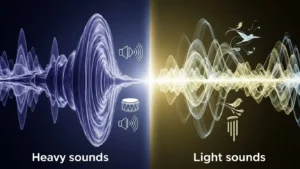
Understanding a bit about how these sounds are physically produced helps you master them better.
How Your Tongue Creates Heavy Sounds
When you pronounce a heavy letter with Takhfeem, here’s what happens in your mouth:
- The back of your tongue rises toward the soft part of the roof of your mouth (soft palate)
- This creates a larger space in your mouth
- The sound resonates in that space, creating a full, echoing quality
- Your mouth literally fills with the sound
This physical action is what makes the letter heavy. You’re not just saying it louder, you’re changing where and how the sound is produced.
How Your Tongue Creates Light Sounds
For light letters with Tarqeeq:
- Your tongue stays relatively flat and relaxed
- The middle or tip of your tongue does most of the work
- There’s less resonance and echo
- The sound comes out cleaner, sharper, and more direct
Once you understand this physical difference, it becomes easier to apply the rules consistently.
Teaching Kids About Takhfeem and Tarqeeq
If you’re a parent helping your child learn Quran recitation, these concepts can seem challenging to explain. Here’s how to make it easier for kids.
Use Simple Comparisons
Tell kids that heavy letters are like elephants: big, strong, and powerful. Light letters are like birds, quick, light, and gentle.
When they see a heavy letter, they should think “elephant sound.” For light letters, think “bird sound.”
Make It Physical
Kids learn through movement. Have them put their hand in front of their mouth when practicing. With heavy letters, they should feel more air and resonance. With light letters, less.
You can also have them place their hand on their throat. Heavy letters create more vibration that they can feel.
Practice With Games
Turn practice into games. Show them a letter and ask “elephant or bird?” Have them compete to correctly identify heavy or light.
You can also play recordings of professional Qaris and pause randomly. Ask your child whether that letter was heavy or light.
How Takhfeem and Tarqeeq Improve Your Spiritual Connection
Beyond the technical aspects, there’s a spiritual dimension to mastering Tajweed.
Deeper Understanding Through Proper Pronunciation
When you recite with correct Takhfeem and Tarqeeq, you’re not just making sounds, you’re truly connecting with the words. The heaviness in certain letters often reflects the weight and importance of the message.
For example, Allah’s attributes like Al-Qawiyy (The Strong) contain heavy letters that reinforce the meaning. When you pronounce them correctly, you feel that strength.
Increased Focus During Recitation
Having to think about heavy and light letters keeps you present and focused. You can’t recite on autopilot when you’re applying Tajweed rules carefully.
This increased focus naturally deepens your connection with what you’re reciting. You’re more aware of each word, each sound, each meaning.
Following in the Footsteps of Scholars
Millions of Muslims over centuries have studied and mastered these rules. When you put in the effort to learn Takhfeem and Tarqeeq, you’re joining that noble tradition.
You’re showing respect for the Quran by taking the time to recite it properly, just as those who came before you did.
Different Levels of Takhfeem
Not all heaviness is the same. Tajweed scholars actually identify different levels of Takhfeem based on the vowel marks on the heavy letter.
Highest Level of Heaviness
This occurs when a heavy letter has a Fatha and is followed by an Alif (creating a long “aa” sound).
Example: طَامَّة (Taammah) – The Taa here has the strongest possible heaviness.
Medium Level of Heaviness
This happens when a heavy letter has a Fatha without the following Alif, or when it has a Dammah.
Example: صَلَاة (Salah) – The Saad is heavy but not at the highest level.
Lower Level of Heaviness
This occurs when a heavy letter has a Kasrah. Yes, even with Kasrah, these letters maintain some heaviness, just less than with other vowels.
Example: صِرَاط (Sirat) – The Saad is still heavy but at the lowest level.
Understanding these levels helps you apply the right amount of emphasis in different situations.
The Role of Technology in Learning
Modern technology has made learning Tajweed rules much easier than it used to be.
Quran Apps With Tajweed Features
Many Quran apps now highlight heavy and light letters in different colors. This visual aid helps learners immediately identify which letters need Takhfeem and which need Tarqeeq.
Apps like Tarteel even use AI to analyze your recitation and tell you if you’re pronouncing letters correctly.
Online Quran Classes
Online Tajweed classes connect you with qualified teachers worldwide. You can learn from expert Qaris who specialize in teaching Takhfeem and Tarqeeq to students of all levels.
The best part? You can learn from home, at times that work for your schedule.
Recording Yourself
Use your phone to record your recitation. Then listen back and compare it to professional reciters. This self-analysis helps you catch mistakes and track your improvement over time.
Real-Life Benefits of Mastering These Rules
Beyond spiritual rewards, there are practical benefits to mastering Takhfeem and Tarqeeq.
Leading Prayer With Confidence
When you know you’re reciting correctly, you feel confident leading others in prayer. You’re not worried about making mistakes that might affect the meaning.
Teaching Others
Once you master these rules, you can help teach others, your children, other family members, friends. Knowledge of Tajweed becomes a gift you can share.
Memorization Becomes Easier
Interestingly, when you understand Tajweed rules including Takhfeem and Tarqeeq, memorizing the Quran becomes easier. The rules create patterns that help your brain encode and recall the text.
Appreciation for Arabic Language
Learning these rules gives you a deeper appreciation for the beauty and precision of the Arabic language. You start to understand why Arabic was chosen for the final revelation.
Why Learn Quran Kids Focuses on Tajweed Fundamentals
At Learn Quran Kids, we understand that mastering Takhfeem and Tarqeeq is foundational to proper Quran recitation. That’s why our curriculum emphasizes these rules from day one.
Expert Teachers Who Specialize in Tajweed
Our instructors aren’t just Quran teachers, they’re Tajweed specialists. Many hold Ijazah in Quran recitation, meaning they have certified chains of transmission going back to the Prophet (PBUH).
They understand exactly how to teach heavy and light letters in ways that make sense to students of all ages and levels.
Age-Appropriate Methods
We teach Tajweed rules differently to kids, teens, and adults. Young children learn through games, songs, and visuals. Older students get more detailed explanations of the rules.
No matter your age or level, we have methods that work for you.
Interactive Practice Sessions
Learning rules in theory isn’t enough. Our classes include extensive practice time where students apply Takhfeem and Tarqeeq in actual Quranic verses.
Teachers provide immediate correction and encouragement, helping students develop muscle memory for correct pronunciation.
Progress Tracking
We track each student’s mastery of specific Tajweed rules including Takhfeem and Tarqeeq. Parents and students can see exactly which rules have been mastered and which need more practice.
This clear progress tracking keeps everyone motivated and ensures steady improvement.
Frequently Asked Questions
Q: How long does it take to master Takhfeem and Tarqeeq? With regular practice and good instruction, most students grasp the basics in 2-3 months. True mastery that becomes automatic takes 6-12 months of consistent practice.
Q: Can I learn these rules without a teacher? While it’s possible to learn the theory alone, having a qualified teacher who can hear and correct your pronunciation makes a huge difference. Self-teaching often leads to mistakes you don’t realize you’re making.
Q: Are there any shortcuts to learning heavy and light letters? Unfortunately, no real shortcuts exist. The key is consistent practice, good instruction, and lots of listening to expert reciters. However, understanding the physical mechanics (tongue position, etc.) can speed up learning.
Q: What if I’ve been reciting wrong for years? It’s never too late to correct your recitation! Many students successfully unlearn bad habits and develop proper Tajweed. It requires patience and dedication, but the improvement is absolutely worth it.
Q: Do all Muslims need to learn Tajweed? While basic recitation is required for prayer, learning detailed Tajweed rules is highly recommended. It shows respect for Allah’s words and helps you recite as the Prophet (PBUH) did.
Q: Is Takhfeem the same as just speaking louder? No! Heaviness isn’t about volume, it’s about the quality and fullness of the sound. You can pronounce a heavy letter softly but still apply proper Takhfeem.
Q: Why do some reciters sound different even though they follow Tajweed? There are different recognized styles (Qira’at) of Quranic recitation, all valid. Within proper Tajweed, there’s some room for individual style while maintaining the core rules like Takhfeem and Tarqeeq.
Q: Can kids really learn these technical rules? Absolutely! Kids often learn Tajweed faster than adults because they’re less self-conscious and more willing to imitate sounds. With the right teaching methods, even young children master these rules.
Start Improving Your Tajweed Today
Understanding Takhfeem and Tarqeeq is one of the most important steps in your Quran learning journey. These rules might seem technical at first, but they become natural with practice.
The difference they make is remarkable. Your recitation becomes clearer, more beautiful, and more correct. You connect more deeply with the Quran. And you honor the text by reciting it the way it was meant to be recited.
Master Tajweed With Learn Quran Kids
Ready to perfect your pronunciation?
✓ Expert Tajweed teachers with Ijazah certification
✓ Personalized instruction focused on your specific needs
✓ Interactive practice with immediate feedback
✓ Flexible online classes that fit your schedule
✓ Proven methods for mastering heavy and light letters
Get Started With Your Free Trial
Don’t let incorrect pronunciation hold you back from beautiful recitation.
- Visit: www.learn-quran-kids.com
- Book: Free trial class, no credit card required
- Email: support@learn-quran-kids.com
- WhatsApp: Quick answers to your questions
Why Choose Learn Quran Kids for Tajweed?
For Students Who Want:
- Clear, understandable explanations
- Patient teachers who care about your progress
- Proven methods that actually work
- Flexible scheduling around your life
- Affordable pricing with excellent value
For Parents Who Value:
- Qualified, vetted instructors
- Safe, monitored online environment
- Regular progress reports
- Kids who actually enjoy learning
- Results you can hear and measure
Because proper Quran recitation matters. Because the words of Allah deserve to be recited beautifully. Because mastering Tajweed transforms your relationship with the Quran.
Join thousands of students worldwide who’ve improved their recitation by mastering Takhfeem and Tarqeeq with Learn Quran Kids.
Start today. Recite beautifully tomorrow. Honor the Quran forever.
About Learn Quran Kids
Learn Quran Kids is a premier online platform dedicated to teaching proper Quran recitation and Tajweed rules. With 90%+ Ijazah-certified instructors, personalized teaching methods, and a deep commitment to quality, we help students of all ages master the art of Quranic recitation. Our specialized focus on foundational rules like Takhfeem and Tarqeeq ensures that every student develops a strong, correct foundation in Tajweed. Whether you’re just beginning your Quran journey or looking to perfect your recitation, we’re here to guide you every step of the way. Join our growing community of successful learners today!